
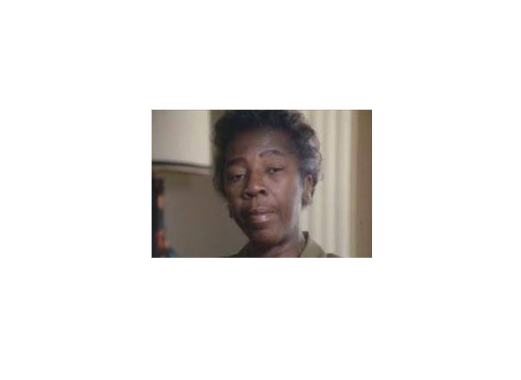
C.W. Roddy was such an annoyance to East Palo Alto CA drug dealers that they put out a $10,000 contract to kill her. She'd already received a flesh wound to her stomach from a shooting the previous New Year's Day, and her bungalow had 35 bullet holes in it from semiautomatic weapon fire. After that, someone tossed Molotov cocktails into her backyard. "But despite all this," said Roddy, "This is my piece of rock, so I'm staying."
At the time, East Palo Alto was a mostly African-American community of about 18,500. But it was having problems. The year before, there were 17 homicides. That was 10 times the national rate. It seemed that drug dealers were everywhere, and they were not peaceful. Not long before she sustained her first attack, Roddy had asked a dealer to move his truck from the front of her house. He punched her in the face. Roddy's neighbor was knifed for defending her in an argument against another dealer. And the time she had a dealer arrested, he was back on the street before she'd finished filling out the police reports. Roddy has yelled at dealers, taken license plate numbers of their cars, and asked for police protection.
She'd been there over 20 years, and she'd seen the community get worse every year: "When I'd open my drapes, I would see all different kinds of cars. I would wake up and find anything and everything on my front lawn . . . plastic bags filled with drug residue. I couldn't get in and I couldn't get out of my house. (Drug dealers) felt like they had the right of way."
However, when Roddy was told that there was a contract out on her and subsequently went public with it, suddenly there was an outcry. Roddy herself had known for a long time that it was up to her neighbors to take action:
"I've been angry, livid, upset with the apathy of the people of East Palo Alto. . . . The people in the communities are the ones who will determine which way the communities will go. They can get involved or they can ignore it. Its up to all of us."
Public officials began to take notice, too, and began making hundreds of arrests. County and city officials applied for a $5.1 million federal grant for law enforcement, drug rehabilitation, and educational programs. At that time, half the city budget went to police services; they needed help.
Things began changing. The neighborhood finally massed behind Roddy's leadership. For example, a group of mothers gathered in a local park, organized its management, and gradually drove out the drug dealers. Roddy said that she was hopeful: "I went by a couple of Saturdays ago and just observed the children out there playing. And it was such a beautiful sight, and it made me feel so good that it brought tears to my eyes. So it's looking better. It didn't all happen in one day and I don't expect it all to change in one day, but I do see the beginning of a change. And the future looks bright."
Update: The people who attacked Roddy's home, and those who put out the contract on her, were never identified. Nonetheless, the East Palo Alto environment improved. In 2000, Roddy said, "I don't know whether (the drug trade) has gone underground . . . but it's certainly not as blatant." An East Palo Alto police spokesman pointed out that Roddy's troubles changed the city: "It brought national attention to our problem. The community itself also had a lot to do with the changes. And the San Mateo County Sheriff says, "Citizens now call us up and will identify certain houses. They are no longer afraid."
And Roddy? "I don't think I would do anything differently. I wouldn't run away from the problem. I have never tried to run away from anything."
C.W. Roddy died in November of 2012. No one ever collected the $10,000.