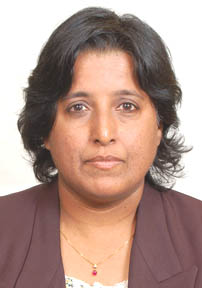
One day in 1981, while a student in law school, Meenakshi "Meena" Raman was shocked to discover that many of her fellow Malaysians had no idea that their country had laws that could protect them when their property, lives, and livelihoods were threatened by corporate or government actions.
When she graduated, Attorney Raman and a friend established the first public interest law firm in Malaysia and dedicated themselves to representing communities that had no access to the legal system. Working with the Consumers Association of Penang, community organizers, the firm represented fishermen whose livelihood was threatened by runoff from industrial waste, and tenant farmers being evicted from land they had lived on for generations.
Raman's firm published pamphlets about the law to help people understand their rights, educated other lawyers about protecting underserved populations, and espoused a philosophy of non-hierarchical law serving the public interest.
This was no desk job. When bulldozers came to destroy farms, Raman and her colleagues stood in front of the tractors while others ran to get injunctions.
Raman filed suit against the Asia Rare Earth Company, a subsidiary of Mitsubishi Corporation partially owned by the Malaysian government. AREC was dumping radioactive wastes in areas that were home to ten thousand people, most of them Chinese. Studies showed high incidences of leukemia in the affected villagers, and high levels of lead in the blood of children. Raman lost the suit but because of enormous public pressure, Mitsubishi chose to close down its operations, relocating them to China.
In the midst of the Mitsubishi case, the Malaysian government arrested and imprisoned Raman and over 100 scholars, reporters, activists and Chinese business people. Raman was never charged with a crime but spent 47 days in prison, in solitary confinement. When she was released, she went right back to work on the case.
Raman has said that her imprisonment has proved helpful in her work. “Malaysians ... they are always worried. I ask them, Why do you worry? After all, the worst-case scenario—I’ve gone through it. So I can comfort them. In a sense, it was a very important moment in my life. It was not easy. It was not easy.”
Raman’s work has extended beyond the borders of Malaysia. She helped found the Environmental Law Alliance Worldwide (E-LAW), a network that facilitates the sharing of scientific, legal and other resources around the world so that small public-interest firms like the one she started in 1981 can get information to help win their cases from experts in other countries .
“We realize that trans-national corporations are very powerful and they operate all over the world," explains "Meena" Raman. "So unless you have an international alliance to counter this, they will go from one country to another country, go to the country with the least [stringent] laws.”
UPDATE
Raman is working as a legal advisor with the Consumer Association of Penang, the group that first opened her eyes to the needs of Malaysia’s underserved. She is Secretary to Sahabat Alam Malaysia, a grassroots, community non-governmental organization involved in environmental and development issues, another group she has worked with since the early 1980s. Since 2004, she has been the chair of Friends of the Earth International, which is leading educational and political efforts on global environmental issues such as climate change.