
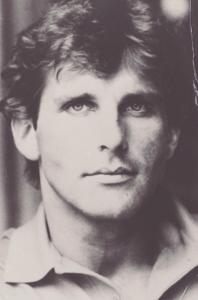
"Winston Man" David Goerlitz used to make $75,000 a year from just one of his many modeling contracts; he was the Winston Man, the square-jawed hero of a cigarette advertising campaign that depicted him as a smoke jumper, a search-and-rescue team member and other "soldiers of fortune," all puffing away. He was a live version of the G.I. Joe action figure. Goerlitz himself smoked more than three packs a day. Though he had health problems that doctors blamed on his heavy smoking, he wouldn't quit.
Then he visited his brother in a Boston hospital. "There's nothing more gut-wrenching than the Winston Man walking around a cancer hospital—pompous, arrogant—not believing the doctors telling me that people are dying in the lung cancer wards, and all of them smoked. That was face-to-face reality that I never saw before, or if I saw it, I denied it."
Goerlitz quit smoking. The contract he had signed promising not to criticize the product had expired just the month before.
Goerlitz embarked on a campaign to stop the industry's targeting of 11-to-14-year-old kids. He knows that 75% of all smokers start before the age of 14; the tobacco companies know it too. Images such as the Winston Man are specifically designed to appeal to young people who want to look older, cooler, in control. A marketing executive told Goerlitz that Winston had dropped its previous "construction worker" ad campaign because the agency said, "kids don't want to be construction workers any more; they want to be heroes."
Goerlitz has facts and figures to back up his assertion that our society in general and our government in particular have tacitly endorsed this threat to kids' health. He's appalled that the #1 addictive drug in America is not regulated by the FDA, that 50 chemicals labeled "zero tolerance" by the EPA in any other form are allowed in cigarettes, and that $3 billion is spent per year to advertise a product with absolutely no positive value.
Goerlitz says he himself was fat, cross-eyed and ugly at age 14. He started smoking because he thought he got confidence from cigarettes. "I wanted to be everything the ads showed." Now he's trying to make up for being the image that headed other kids toward this addiction. He says he wants to move from "being an ad model to being a role model."
In order to do this, Goerlitz has sacrificed his lucrative modeling career. The conglomerates that sell tobacco also own thousands of other major companies, none of them likely to want the services of David Goerlitz. In fact, no company that feels vulnerable will want to use him. Goerlitz told us, "I don't blame them. People say, "What if he sold milk and gets fat around his heart," People are afraid of what I might do."
Goerlitz supports his family with residuals (ongoing payments for past work), earnings from a small acting school he runs, and from the occasional modeling assignment from a brave sponsor. Most of his time is spent crisscrossing the country educating students about the dangers of tobacco. He has testified before a Congressional committee, pushing for legislation that would ban "image" advertising by cigarette companies and restrict them to just the brand name and a picture of the package.
Goerlitz approaches his no-smoking campaign with all the verve and style he once brought to being the Winston Man. But he's not looking for any pats on the back—he's doing this for the kids who bought his nicotine number.