
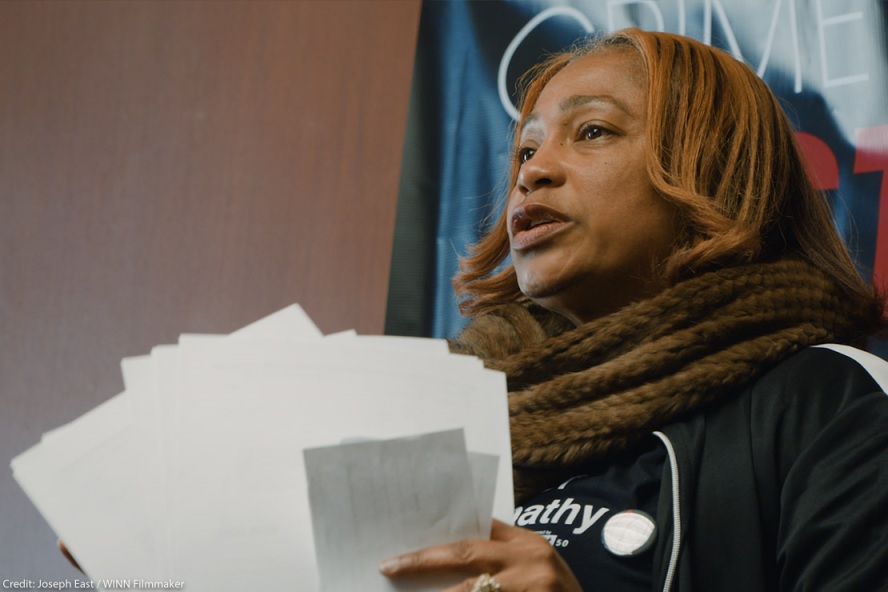
Pamela Winn was a mother of two and a registered nurse specializing in gynecology and perinatal case management when she was convicted of bank fraud and sentenced to serve 78 months in a Georgia prison. She was pregnant when she began her sentence.
The conditions she found in the prison were deplorable by any standards—perpetual shackling, no access to drinking water or medical services, and abuse by guards. One day, while shackled and attempting to step up into a van for a court date, Winn fell. A couple of days later, she began to bleed. Despite screaming and banging on her cell door, it took guards hours to appear, and then they actually debated whether they should take Winn to a hospital. They finally called 911. Winn recalls what happened at the hospital:
“I get there, I’m immediately shackled to the hospital bed, which is how I completed the rest of [the] miscarriage—with two male officers between my legs that I didn’t know from Adam, who refused to leave the room, refused to give me any type of privacy.”
The officers reported throwing the fetus in the trash. Returned to the prison, Winn was put in solitary, which meant no window, no mirror, no clock, leaving her cell for only an hour each day, and showering three times a week but only if staff were available to escort her.
Upon her release, Winn had a cause. “When I got home, I was told that there was nothing that could be done, and that’s basically what kind of triggered me to do something, because I didn’t like that answer and I didn’t agree with it at all. . . . When I was sentenced to serve 78 months, they didn’t say I was sentenced to serve 78 months and be tortured, kill my baby, ... not have drinkable water. It didn’t say all of those things. And those are the things that are happening to the women that are inside.”
Her nursing license had been revoked, she was having a hard time finding work and housing, and prison had left her with a fear of small spaces and of strangers, but Winn prevailed.
She founded RestoreHER, which advocates for the prohibition of shackling and solitary confinement of pregnant and post-partum incarcerated women. Her work led to Georgia’s passing of the First Step Act, and 19 other states have since passed bills prohibiting the shackling of pregnant women in prisons and jails.
“Although I didn’t plan to talk about [my prison experience], didn’t really want to talk about it, I knew it was necessary that I did, for the women that I had left behind, to make sure nobody else had to go through what I went through.” And “nobody else” includes the estimated 58,000 pregnant women sent to US jails and prisons every year.
“I want people to learn, see, and know that incarcerated people are no different from themselves. The only difference is we did something wrong, we made a mistake. So, the same empathy and compassion that they would want for themselves or their family members is the same that we’re asking for.”
She’s very aware of what she’s up against: “Regardless of what you think about women, what you think about incarcerated folks, or what you think about people of color, when it comes to babies, we all agree we want safe, healthy babies.”