
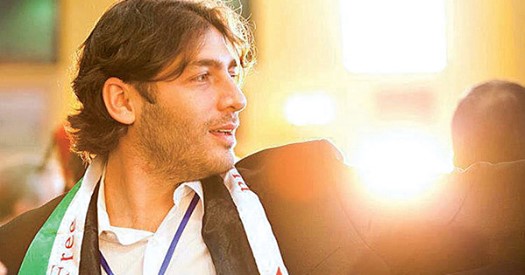
In many ways, Yakzan Shishakly could be a poster boy for the American success story. The grandson of a former president of Syria and the brother of a Syrian politician opposing President Assad, he emigrated to Houston in 1997 when he was 19. He waited tables to earn tuition for community college and graduated with a degree in air-conditioning installation and repair. Shishakly then started his own air-conditioning business, and it was a roaring success.
In early 2011 Syria erupted and Syrians poured into Turkey, seeking safety. Once in Turkey, the Syrians seek food, water, and shelter; they don't always find it. Over 8,000 Syrian children crossed the border into Turkey without their parents; many of their parents have been killed.
Because of his grandfather and brother, Yakzan Shishakly was on President Assad's You'll-Be-Very-Sorry-If-You-Cause-Trouble list—a list you definitely don't want to be on. From his home in the US, Shishakly organized protests and supported organizations that help the refugees. But he soon took his activism closer to the dangers, setting up in Turkey and going back and forth into Syria. What he saw there changed his life forever: Hundreds of Syrian men, women, and children were in hiding; they had lost virtually all their possessions, and their lives were constantly in danger. They were Internally Displaced Persons—IDPs.
Shishakly created a place for them in Syria that he called the Olive Tree Camp. He purchased supplies in Turkey and got them to the IDPs in the camp. But he knew he had to do even more.
He set up the Maram Foundation, named after a four-year-old girl who was paralyzed by a shell fragment in Syria but never gave up hope that one day she'd be able to move her legs again. The Maram Foundation began to solicit donations from individuals and organizations around the world.
Shishakly was a constant presence in the camp—teaching the adults,playing with the children, and working with vendors and soldiers. He established the Bayti Orphanage, which provides a home to 60 Syrian children.
Soon, Shishakly realized that his home was no longer Houston, where he was making money, but rather the Syrian-Turkish border, where he and what money he had were so deperately needed. He gave up his air-conditioning business and started working fulltime to help displaced Syrians.
He has since made himself an all-purpose aid agency: Sometimes he has to negotiate with hostile villagers. Sometimes he has to contend with aerial bombardments. Sometimes he has to secure food, supplies, water, and shelter. Sometimes he has to comfort children who have lost their parents or parents who have lost their children. As he has said, "I don't even know what I'm supposed to be anymore. Am I a camp director, crisis manager, emergency operator, counselor? I don't know."
He did come to know two things: One is that he was in danger at the camp. In fact, he was kidnapped by men from the Free Syrian Army, who drove him away for a few hours and made the point that he had absolutely no power over them. Shishakly was committed but not stupid: He moved across the border to Turkey and left the management of the camp to local Syrians who didn't pose a threat—real or imagined—to the rebel armies.
The second thing he came to know is that Olive Tree needed funding; currently, the camp costs nearly $100,000 a month for food, kitchen supplies, water, tents, medicine, a school, a women's center, and salaries for every staff except Shishakly himself. Shishakly returned to Houston less and less; when he did go, it was to raise money for Maram. And leaving the Syrian families became less and less an option. After all, he says, "If you are their only hope, how can you leave them in need?"
Today the Olive Tree Camp houses more than 25,000 men, women, and children in about 4,000 tents. It has only about 100 bathrooms. There is no electricity, no heat, and no running water. Nevertheless, about a hundred people enter the camp every day. Some of them are injured and need emergency medical care. Almost all of them are hungry, cold, and traumatized. "We cannot say no," says Shishakly. "It's not like we have a gate and we close it in the night. I mean, people come with the hope to stay here and we cannot turn them down and say no. So we're open for everybody. They come with the hope and we are their hope."
Does he regret for an instant leaving his plush life in America? It would seem not. Shishakly remains determined to serve the refugees.
"When you help, you make a difference in a life. That feeling is more than enough to empower you to keep working."
You can follow his work at www.maramfoundation.org